Summarize this article with AI(click one of the models and ctrl+v)





Every few months a new wave of AI headlines arrives, and with it a familiar anxiety: will this technology eventually replace us?
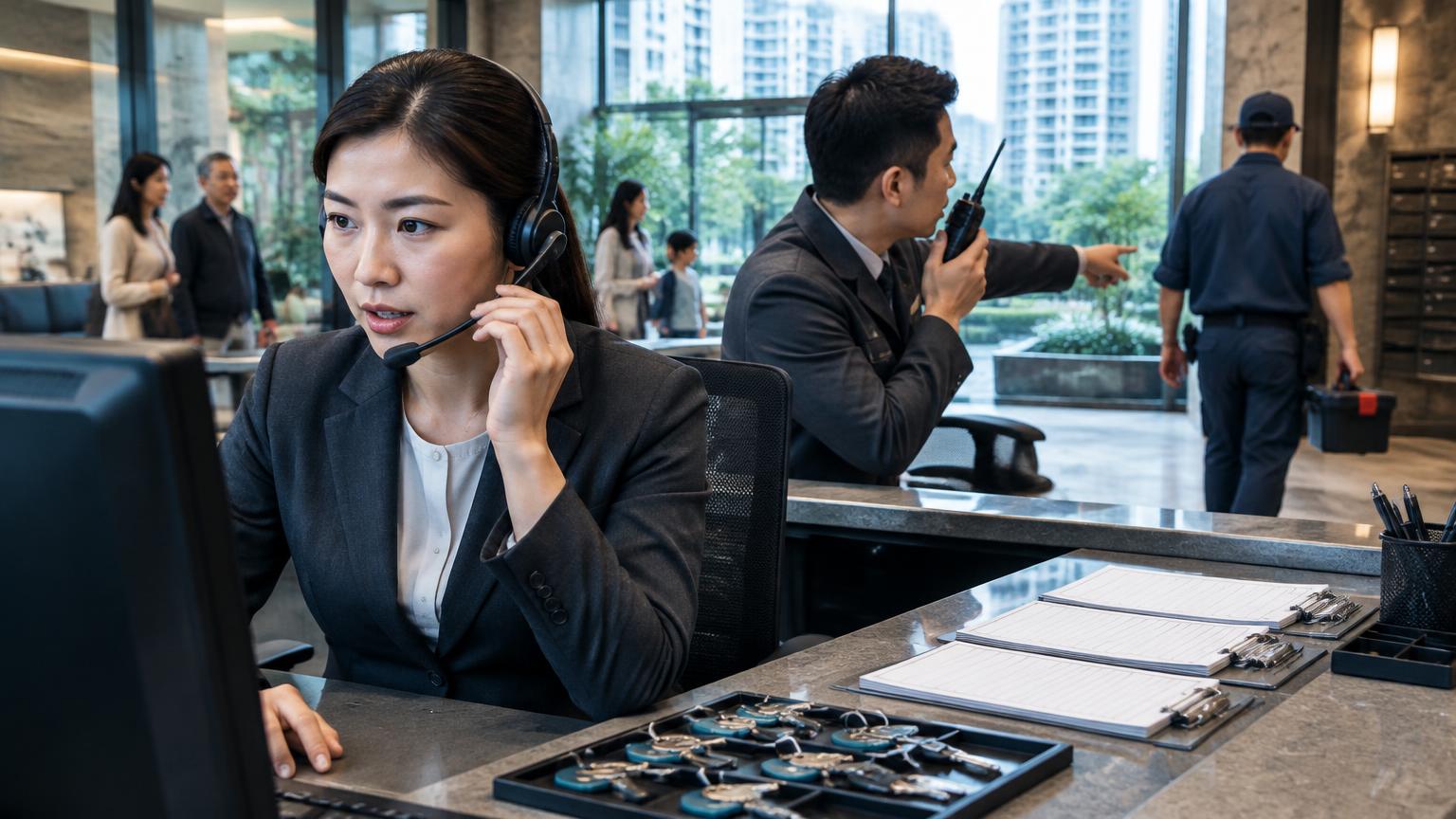
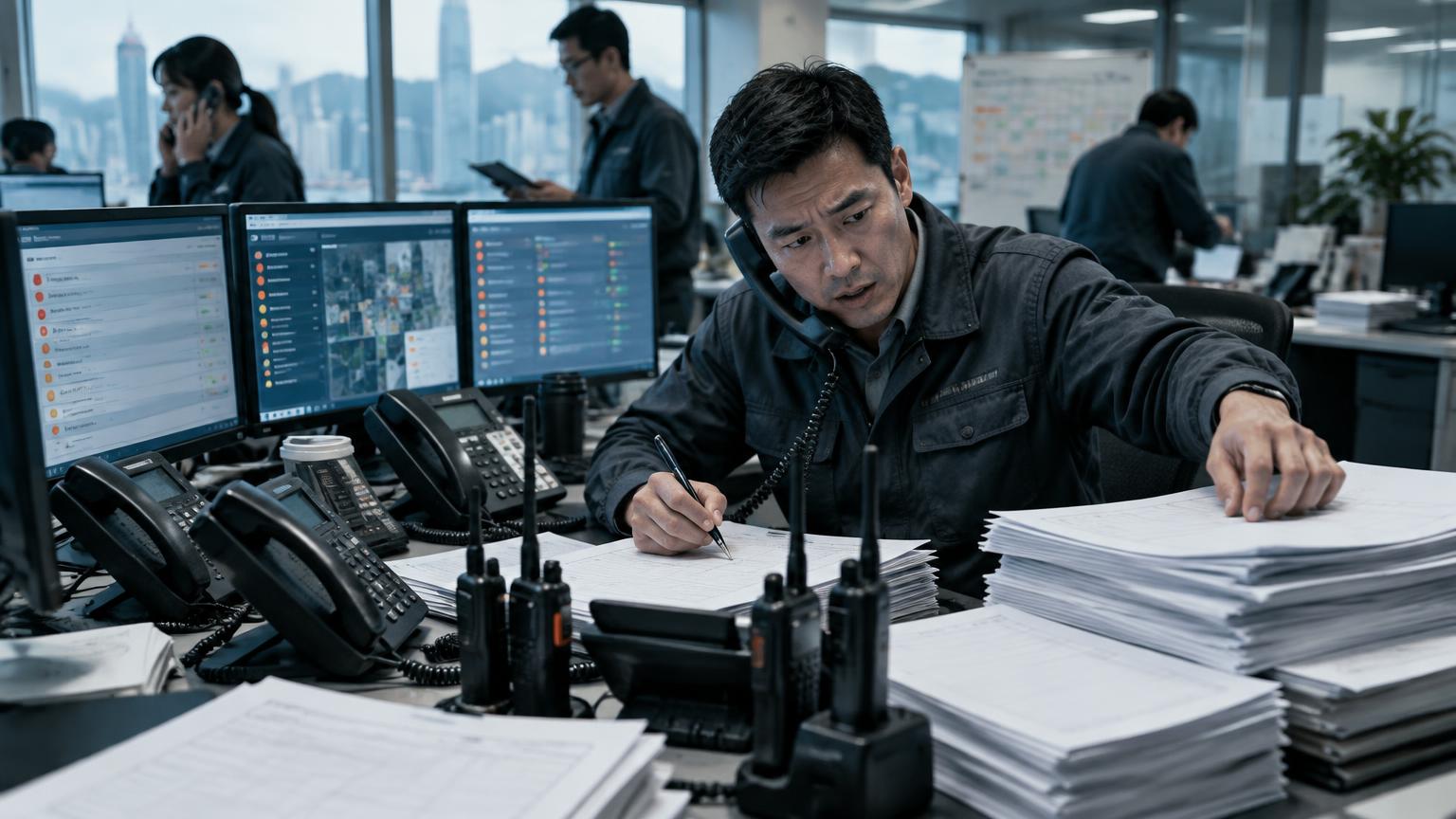
In property and facility management the question feels especially sharp. Teams are already stretched. Call volumes keep rising. After-hours emergencies do not respect office hours. Residents expect instant responses. Contractors need chasing. Reports still have to be compiled by hand. When an AI system claims it can answer calls, create work orders and dispatch technicians around the clock, it is natural to wonder what space is left for the human professional.
The honest answer is more nuanced — and more hopeful — than the headlines suggest.
The fear is real. So is the misunderstanding.
Most of the fear comes from watching AI handle tasks that once defined the job: picking up the phone, logging details, deciding urgency, notifying the right person. When those steps disappear into an automated flow, it can feel like the role itself is shrinking.
What is actually shrinking is the volume of low-value, high-friction work that has been quietly eroding the profession for years. The late-night calls that interrupt family time. The incomplete notes that force someone to reconstruct a story three days later. The endless WhatsApp threads that never quite close the loop after the call. The repetitive questions that pull experienced officers away from the work only they can do.
AI does not eliminate the need for judgment, empathy or presence. It removes the administrative drag that prevents those human strengths from being used fully. This is the same shift described when teams begin to reduce the repetitive workload that currently fills most of the day.
What AI actually takes — and what it leaves behind
A well-designed system can answer a call in natural Cantonese, extract structured details, classify the issue, open a work order and route it to the correct team. That is not a small contribution. It is the difference between a resident feeling heard at 2am and a missed call that becomes a formal complaint the next morning. Many of the everyday situations that currently consume frontline time — noise reports, lockouts, leaks, access issues — fall into patterns that AI can already handle end to end.
But the system still cannot sit with an angry resident who needs to feel understood before any solution will be accepted. It cannot negotiate with a contractor who is over-promising and under-delivering. It cannot weigh the political and relational consequences of how a sensitive dispute is handled. It cannot walk a building and notice the small signs that a larger problem is forming.
Those remain human responsibilities. In fact, they become more important, not less, once the routine load is lifted.
This is why the most useful framing is not "AI versus staff." It is "AI for the repetitive layer, humans for the judgment layer." When the two are properly connected, the property team's capacity expands without the team itself being hollowed out.
The quiet shift already underway
Look at the teams that have moved beyond pilots. The pattern is consistent. Front-desk officers stop spending half their day retyping the same information into different systems. Duty managers stop starting every morning by reconstructing what happened overnight. Engineers receive clearer job details and fewer follow-up calls asking for basic context. Senior staff spend more time on preventive planning, contractor performance and resident relationships instead of firefighting administrative gaps.
The job does not disappear. It becomes more focused on the parts that actually require experience and care. In that sense, AI is not replacing the property manager. It is forcing the role to become more of what it was always supposed to be: a steward of buildings and of the people who live and work in them.
This is also why purpose-built platforms matter more than generic voice tools. A system designed only to "answer calls" still leaves the hard part — ownership, tracking and resolution — on human shoulders, which is exactly why so many call centres fail after the call ends. A system designed as an operations layer that turns every call into structured action changes the daily texture of the work. It does not just reduce volume; it changes which volume reaches the team.
A more useful question
Instead of asking "will AI replace property managers?", a better question is: what kind of property manager will the next decade reward?
The answer is not the person who can process the most tickets by hand. It is the person who can use the time AI frees to exercise judgment, build trust and solve the problems that do not fit neatly into a form. The person who can read a situation, not just a dashboard. The person who understands that a building is not only a collection of assets but a place where people's lives unfold.
That version of the role is harder to automate precisely because it is more human. And it is more valuable for the same reason.
The work worth keeping
Technology will continue to advance. More tasks will become automatable. Some roles will change shape. That is the nature of every major tool that has entered professional life — from the spreadsheet to the smartphone.
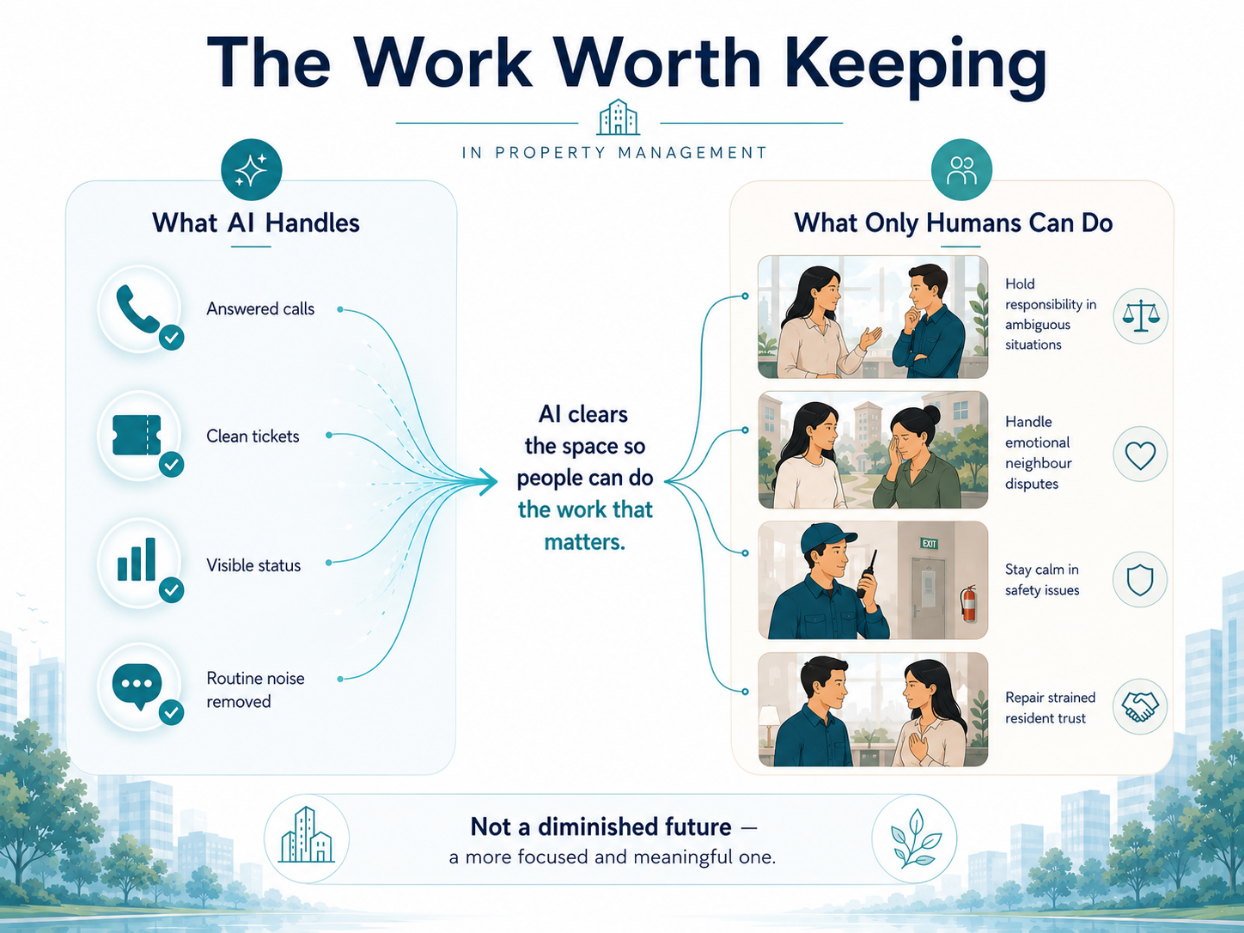
What does not change is the need for people who can hold responsibility when things are ambiguous, emotional or high-stakes. In property management those moments arrive every week: the neighbour dispute that could escalate, the safety issue that requires calm under pressure, the long-term resident whose trust has been strained and needs careful repair.
AI can prepare the ground for those moments by making sure the information is complete, the history is visible and the routine noise has already been handled. It cannot replace the human who steps into them.
The teams that thrive will be the ones that stop treating AI as a threat to defend against and start treating it as infrastructure that lets their people do the work only people can do. When the phones are answered, the tickets are clean and the status is visible, something quieter and more important becomes possible: the chance to practise the craft of property management with greater attention and less exhaustion.
That is not a diminished future. It is a more focused one — and, for those willing to step into it, a more meaningful one as well.
FAQ
Will AI replace property managers?
No. AI is very good at handling repetitive, structured work — answering calls, creating tickets, classifying issues and routing them. It is not good at judgment, empathy, negotiation or reading complex human situations. Those remain core parts of the property manager's role.
What parts of the job is AI most likely to take over?
The high-volume, low-judgment tasks: routine enquiries, basic maintenance intake, after-hours call handling, status updates and initial dispatch. These are the activities that currently consume a large share of frontline time and contribute most to burnout.
What happens to the human side of the job?
It becomes more important. Once the routine noise is handled, property managers have more space for the moments that actually require experience and care: de-escalating disputes, making judgment calls under pressure and rebuilding trust with residents.
Is this just a nicer way of saying jobs will be automated?
No. The distinction matters. Automating the administrative layer does not remove the need for accountability, presence and human judgment. In fact, those qualities become the main differentiator as routine work becomes easier to systemise.
Can AI and human teams really work well together?
Yes — when the division of labour is clear. AI handles the repetitive layer; humans handle the judgment layer. The teams that thrive are the ones that treat AI as infrastructure that protects their people's time and attention, rather than as a threat to be resisted.