
Summarize this article with AI(click one of the models and ctrl+v)





Background
Facility management companies usually start with one of two approaches:
- Building something in-house — impressive demo, then stalls due to technical and maintenance burden.
- Pure outsourcing — answers the phone but still produces vague notes and limited visibility.
In both cases, the system solves only part of the problem. The deeper operational friction — structured intake, live visibility, consistent after-hours handling — remains.
Why the majority of teams still feel overwhelmed
- Incomplete information — the call is answered, but critical details are missing
- Night-time visibility gap — issues surface only in the morning
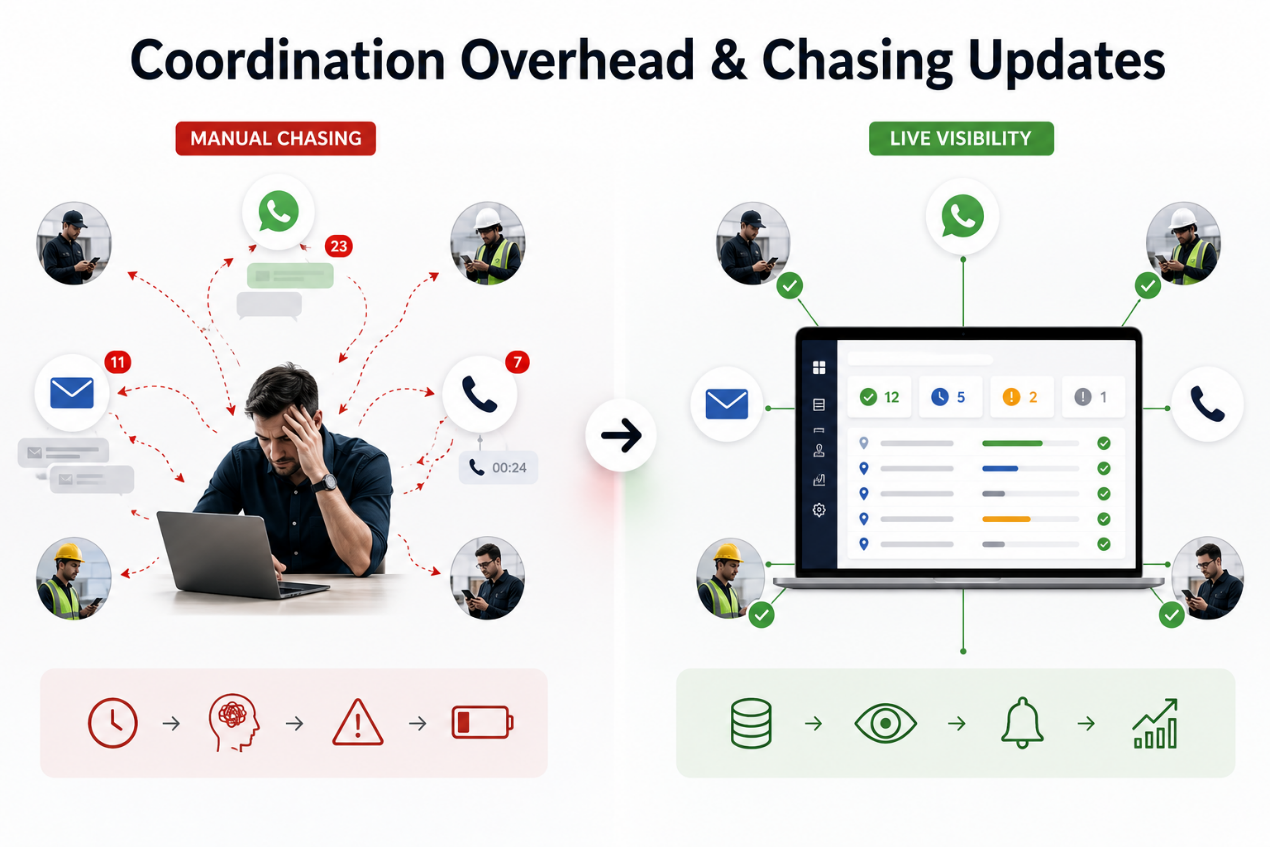
- Coordination overhead — managers still spend time chasing updates
- Record quality — weak audit trails for compliance and invoicing
These gaps are exactly what purpose-built platforms like Routiq AI are designed to close. Instead of stopping at “answered the call”, they turn every interaction into a complete, tracked work order with live visibility.
| Operational gap | What happens | Business impact |
|---|---|---|
| Incomplete information | Critical details are missing from the initial report | Repeat visits & wasted technician time |
| Night-time visibility | Issues surface only the next morning | Delayed response to urgent problems |
| Coordination overhead | Managers chase updates across multiple channels | Lost time, interruptions & burnout |
| Weak records | Information is fragmented or incomplete | Harder compliance, SLA defence & invoicing |
The hidden cost of incomplete information
The largest daily friction comes not from the technical difficulty of the repair itself, but from missing or unclear information at the start of the process.
A caretaker calls about “A 座有水”. The note that reaches the contractor is too short. The technician arrives, cannot find the exact location or does not know the access procedure, calls for clarification, and often needs a second visit.
This pattern repeats across schools, large facilities, residential estates and commercial buildings every week. The consequences of that gap are examined in more detail when looking at what tends to break after a call ends.
The night-time visibility gap
After-hours coverage is expensive and fragile. Many facility management companies still rely on a single on-call person, or pay overtime for a duty officer who cannot answer every call. The result: water leaks, access failures and urgent maintenance reports only get handled the next morning.
A 24/7 AI system answers every call instantly across English, Cantonese and Mandarin — auto-classifies issues like plumbing leaks or lift faults, creates structured work orders, and dispatches the right technician with full context before the team even wakes up. No missed calls, no waiting, no silent nights.
Coordination overhead and chasing updates
Managers and dispatchers still waste hours every day chasing status updates across WhatsApp, email and phone — a constant, silent tax on their time. What starts as a quick text reply can easily turn into a 30-minute conversation that derails an entire afternoon. The constant back-and-forth saps energy, increases errors, and leaves teams exhausted long before the workday ends.
When the system captures every piece of structured information and delivers true live visibility, the chasing stops. No more lost time, no more mental drain, no more endless back-and-forth pulling focus away from the maintenance and operations work that actually matters.
Weak records and compliance challenges
Weak records make SLA defence and invoicing harder. Facility management companies are expected to maintain effective complaint-handling mechanisms (see PMSA requirements). Poor records make compliance difficult and audits stressful. A purpose-built platform keeps a complete, searchable, audit-ready record automatically.
What actually makes AI work
- Measure ticket completeness — track how complete each work order is, not just how fast it was answered.
- Automate the structured process — let the system capture location, urgency, access and safety context automatically.
- Keep humans in the loop — escalate complex or sensitive cases with full context already prepared.
When these three elements are in place, AI stops being a “nice-to-have” and becomes a genuine workload reducer.
How AI call centre and dispatch systems like Routiq AI close the gaps
The real test of any call-handling system is not how politely the phone is answered. It is what the technician actually receives when they arrive on site.
With most AI pilots and traditional outsourcing setups, that final piece of information is still incomplete. The technician shows up with a vague note — “A 座有水” — but no exact location, no access instructions, no sense of urgency, and no safety context. They spend the first 15–20 minutes calling for clarification, walking around trying to find the problem, or discovering they do not have the right tools or permissions. In many cases they leave and come back a second time. That single missing layer of detail quietly multiplies cost, delays resolution, and frustrates both the client and the frontline team.
Routiq AI was built to change exactly that stretch of the workflow. It treats the call as the starting point of a complete work order, not the end of the interaction. During the conversation it actively clarifies the details that matter on the ground — precise location, symptoms, urgency, access procedures and safety notes — then carries that structured information all the way through classification, priority setting and dispatch. By the time the technician is assigned, the context is already there.
The result is fewer clarification calls, fewer wasted first visits, and fewer repeat trips. For a wider view of how current AI call-centre solutions differ in scope, see the comparison of modern AI call centre approaches.
FAQ
Why do so many facility management companies try AI and then go back to manual processes?
Most AI pilots only solve the “answering the phone” part. They still leave critical gaps — incomplete tickets, missing details, poor visibility after hours, and weak records. When the operational friction remains, teams quietly return to the old way of working because the AI never fully reduced their workload.
What's the real cost of incomplete information on a call?
A vague report like “A 座有水” often leads to technicians arriving without exact location, access instructions, or urgency context. This causes clarification calls, wasted site visits, and repeat trips. The problem isn't the repair itself — it's the missing information at the start that multiplies time and cost across the whole workflow.
How big is the night-time visibility problem?
Many companies still rely on a single on-call person or expensive overtime coverage. Urgent issues such as water leaks or access failures frequently go unhandled until the next morning. This creates delayed responses, higher damage risk, and stress for both clients and internal teams.
Why do managers still spend so much time chasing updates even after adopting AI?
When information is fragmented across WhatsApp, email, phone notes, and incomplete tickets, managers become the human coordination layer. What starts as a quick status check easily turns into long back-and-forth conversations that interrupt real work and contribute to burnout.
How do weak records affect compliance and invoicing?
Facility management companies are expected to maintain clear complaint-handling records (including under PMSA requirements). Incomplete or scattered notes make audits stressful, SLA defence difficult, and accurate invoicing harder. A proper system should create a complete, searchable, audit-ready trail automatically.